Table of Contents
There is a bronze statue on the pedestrian bridge at Shem Creek in Mount Pleasant, South Carolina, of a man holding a bunch of shrimp in his outstretched hand. Captain Wayne Magwood, who shrimped these waters for fifty years aboard the Winds of Fortune, was killed crossing Coleman Boulevard in September 2020, struck by a truck on his way home from the docks. His family spent four years raising money for the memorial. A sculptor in Savannah cast it in oil-based clay and then in bronze, capturing what his daughter called his warm smile and kind eyes. It was unveiled in April 2025. Nine months later, someone broke the shrimp off his hand and stole them. They were returned, anonymously, the next day. I mention this not because it is the most important thing happening to the fishing industry of the American Southeast, but because it is, in miniature, the whole story: something valuable held out to the public, taken for granted, broken off, and returned only after someone noticed it was missing.
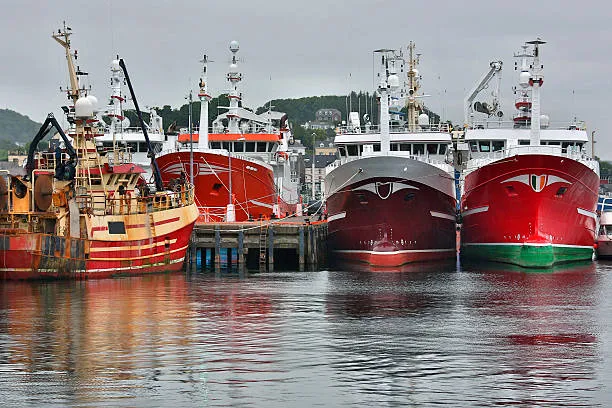
Shem Creek was, within living memory, one of the most active shrimping harbours on the South Atlantic coast. Rocky Magwood, Wayne's nephew, is a fourth-generation shrimper who remembers boats lined up three to a dock, roughly eighty in all. Twenty-five years ago that number had fallen to seventy. Today there are seven. Seven boats working a creek now better known for its boardwalk restaurants and paddleboard rental outfits. Rocky, who is president of the South Carolina Shrimpers Association and who still goes out at four in the morning on the Magwood's Pride, has said that he might be the last one. He has also said, in the particular cadence of a man who has heard himself say it too many times, that everything they buy to maintain their boats has doubled or quadrupled in price, while they get paid less for shrimp now than they did in 1992.
The shrimp problem is the easiest to understand and the hardest to fix. Approximately ninety-four per cent of the shrimp consumed in the United States is imported. That figure bears repeating, because it tends to slide past people. Nearly all the shrimp Americans eat comes from somewhere else—farm-raised, mostly, in India, Ecuador, Vietnam, and Indonesia, in quantities that dwarf anything the domestic fleet could match, at prices that make competition functionally impossible. The U.S. shrimp industry has lost more than half its market value in recent years. In the Gulf, where the wild-caught shrimp fishery is among the most culturally significant in the country, revenue fell from three hundred and twenty-nine million dollars in 2022 to two hundred and four million in 2023. That is a thirty-eight per cent collapse. Landings barely changed—the fishermen caught roughly the same amount of shrimp—but the price had cratered so thoroughly that many could not cover the cost of fuel and ice to go get it.
The economics of this are perverse in a way that rewards almost nobody who does honest work. Imported shrimp arrives frozen, in boxes, on schedule, at a fraction of the domestic price. Retail prices for consumers, meanwhile, have remained stubbornly high. The margin between what the packing house pays and what the restaurant charges has widened into a canyon, and the people on either end—the fisherman and the diner—are both getting a bad deal. Only the middlemen profit, and they prefer not to discuss it.
In Sneads Ferry, North Carolina, the door of the Davis Seafood office bears two stickers with the same message: FRIENDS DON'T LET FRIENDS EAT IMPORTED SHRIMP. Customers notice it and laugh. The Davis family does not. They have been at that exact spot on the New River since 1949, and they have been commercial fishermen for centuries before that—Welsh ancestors who settled in Carteret County and worked their way up the coast to Onslow. Jody Davis, who co-owns the fish house, learned to behead shrimp at the age of four, filling a bucket for his grandmother for a quarter. His daughter Hannah does it now, muscle memory filling the bin. When he says fishing is all they have ever done, he is not reaching for effect. He is stating a genealogical fact.
The uncomfortable truth, which shrimpers along the coast are reluctant to dwell on because they are friends with many of the people involved, is that a great number of coastal restaurants serve imported shrimp while decorating their walls with paintings of local boats. In Savannah, a consulting firm called SeaD performed genetic testing on shrimp from forty-four restaurants and found that thirty-four of them were serving foreign product. Jesse Petrea, a Republican state representative, introduced a bill requiring restaurants to disclose the origin of their shrimp. It did not pass. He plans to bring it back. Alabama has a similar law. Louisiana and Mississippi already require labelling. But the problem is larger than any one bill, because even with labelling, even with tariffs, even with every possible lever pulled, imported shrimp will still be cheaper. The question is whether cheaper is a good enough reason to let an industry die.
The tariff situation deserves a paragraph of its own, because it has been a source of both hope and whiplash. The Trump administration imposed duties on shrimp imports under the International Emergency Economic Powers Act, which the Southern Shrimp Alliance—the industry's main advocacy group—described as a crucial lifeline. For the first time in years, some shrimpers went back to work. Then the Supreme Court ruled against the use of IEEPA for tariffs, and the lifeline frayed. The administration pivoted to Section 301 investigations under the Trade Act of 1974, which is a slower mechanism but one with more established legal footing. For multigenerational shrimping families, the distance between a legal mechanism and survival is measured in seasons, not statutes. You cannot tell a man whose boat needs a new engine that relief is working its way through the regulatory process. Or rather, you can, but he will not find it reassuring.
The Southern Shrimp Alliance has been blunt about the stakes. Imported shrimp volumes rose eleven per cent in the first five months of 2025, with Ecuador and India responsible for seventy per cent of the surge. International financial institutions supported by American taxpayer dollars have invested billions into foreign shrimp aquaculture—helping, in effect, to build the industry that is destroying the domestic one. The Alliance's executive director, John Williams, put it plainly: had they gone another season without intervention, there would be few American shrimpers left.
Shrimp is the crisis people can feel. Red snapper is the one that makes them furious.
I should explain, briefly, how fisheries management works in the United States, because without that context the red snapper situation sounds like satire. Federal fisheries are governed by the Magnuson-Stevens Act, a law passed in 1976 and reauthorised twice since, which established eight regional management councils and gave them authority, in partnership with NOAA Fisheries, to set catch limits for species in federal waters. In the Southeast, two councils share the work: the South Atlantic Fishery Management Council, covering North Carolina to the Florida Keys, and the Gulf of Mexico Fishery Management Council—now officially managing the rechristened "Gulf of America," a name change ordered by executive action in January 2025 that has settled into the regulatory language with the quiet awkwardness of a guest who arrived at the wrong party. The Magnuson-Stevens Act requires annual catch limits based on the best available science. When a stock is found to be overfished, a rebuilding plan must follow. The system is conservative by design. It was built to prevent the kind of collapse that destroyed the North Atlantic cod. In that, it has largely succeeded. The side effects, however, are something else.
Red snapper is a long-lived reef fish—they can reach fifty-seven years—with crimson scales and sweet white meat and a cultural significance in the Gulf states that borders on the devotional. In the Gulf, after decades of rebuilding, the population has rebounded to the point where the total recreational and commercial quota for 2025 was set at 16.31 million pounds. The recreational for-hire season ran a hundred and seven days. Charter captains in Destin and Orange Beach ran snapper trips through the summer and into autumn. When catch data showed the annual target had not been reached, NOAA reopened the for-hire season for a bonus stretch in December. It was, by the standards of recent history, a good year.
Now cross to the South Atlantic, where the same fish, the same species, Lutjanus campechanus, tells a story so different it might as well be a different ocean. A 2025 stock assessment found that South Atlantic red snapper were still undergoing overfishing. NOAA implemented Amendment 59 to the Snapper-Grouper management plan, reducing the commercial catch limit to 102,951 pounds and the recreational catch limit to 22,797 fish. The recreational season lasted two days. A single July weekend—Saturday and Sunday, July 11 and 12. The commercial season opened the following Monday and was shut down by late September when the quota was met. A charter captain working out of, say, Murrells Inlet had two days to take clients snapper fishing. His counterpart in Pensacola had a hundred and seven. They fish the same ocean. They are governed by the same law. The difference is the stock assessment, and the stock assessment is the stock assessment. There is no arguing with it, even when it makes you want to.
The commercial reef fish fishery in the Gulf operates under a system called Individual Fishing Quotas—IFQs—which allocate a percentage of the total allowable catch to individual shareholders. The idea was to end the so-called derby, in which boats raced each other to haul in as much fish as possible before the season slammed shut, a practice that was dangerous, wasteful, and economically irrational. The IFQ system has done that. Boats can fish when conditions are safe and markets are favourable. The catch is spread over a longer season. The product is fresher. In theory, everybody wins.
In practice, the quotas have consolidated. Fishing rights have migrated from working fishermen to investors and absentee holders who lease their share back to the boats that actually go out. It is the same pattern you see in farmland, in taxi medallions, in any system where a tradable right detaches from the labour it was meant to support. The Gulf Council is now considering amendments that would require a commercial reef fish permit to maintain an IFQ account—an effort to ensure that the people who hold the quota actually fish. Whether this will work, or whether it will simply drive the consolidation into more creative legal structures, is the kind of question that keeps fisheries economists employed.
Meanwhile, for the shallow-water grouper complex—scamp, yellowmouth, black grouper, and yellowfin grouper—a recent stock assessment prompted NOAA to hold back a portion of the 2026 commercial quota while a framework action works its way through the process. The proposed reduction would cut the commercial quota from 525,000 pounds to roughly 245,000, a halving that will ripple through ports from Key West to Galveston. The fishermen I have spoken to about this tend to respond with a kind of exhausted fatalism. They understand the science. They do not dispute it. They simply observe that understanding does not pay the mortgage.
There is one more thing, and it is the thing that nobody has a policy for.
Black gill disease appeared in the Georgia shrimp fishery some years ago—a condition caused by a ciliate parasite that had, until recently, never been identified by scientists. The parasite was probably always there, but it had never caused a problem. What changed, according to Marc Frischer, the researcher whose team identified the organism, was the environment. The waters off the southeastern coast are warming. The conditions that allow the ciliate to thrive—the intersection of host, pathogen, and temperature—have aligned in a way they never had before. The disease does not kill shrimp outright, but it weakens them, and it shows up at precisely the wrong time, when the fishery is already under pressure from every other direction. Frischer has said, with the calm of a man who has spent a career studying things people would rather not hear about, that black gill is not an anomaly. It is a preview. As the climate changes, he said, we are going to see a lot more stories like that in many, many more species.
South Carolina had its warmest January-to-March period on record in 2025, continuing a trend of mild winters that allows more shrimp to survive into spring but that may also be shifting species ranges in ways nobody fully understands yet. The Southeast coast provides the only known calving grounds for the North Atlantic right whale, which adds another regulatory layer—and another constituency—to every conversation about what happens in these waters. The shrimpers and the whale biologists and the snapper charter captains and the grouper longliners are all operating in the same narrow strip of ocean, and the ocean is not getting any wider.
I have spent enough time on docks in the Lowcountry and on the Carolina coast and in the fish houses of the Gulf to know that the people who work these waters do not talk the way policy documents talk. They talk about fuel prices and bait costs and engine repairs. They talk about the season that got cut short and the one that never opened. They talk about their children, and whether those children will have any reason to stay. In Sneads Ferry, Buddy Davis, who is eighty-three and still tinkers around the property, said what a lot of them feel: it is like everything is against us. He did not say it with self-pity. He said it the way you state a weather observation.
In Townsend, Georgia, a former shrimper named Charlie Phillips runs a dockside restaurant where he serves only the locally caught kind. He does not catch or pack shrimp anymore because the economics stopped working. The packing house next door, which he also owns, sits idle. Packing houses control the docks in many ports, and when they close, the fishermen lose not just a buyer but a place to tie up. The physical infrastructure of small-scale commercial fishing is disappearing, and unlike a shrimp boat, a dock does not come back when the price improves.
On Shem Creek, the tourists walk the boardwalk and eat at the restaurants that line both banks and take photographs of the remaining boats as though they are scenery. Some of those restaurants serve local shrimp. A good number do not. At the foot of Wayne Magwood's statue there is a QR code you can scan to find out which ones do. It is a small gesture—a bronze man holding out his catch to anyone willing to look—but it is also, if you think about it for a moment, a kind of plea. The shrimp were stolen from his hand and then returned. The industry they represent has not yet been so lucky.