Table of Contents
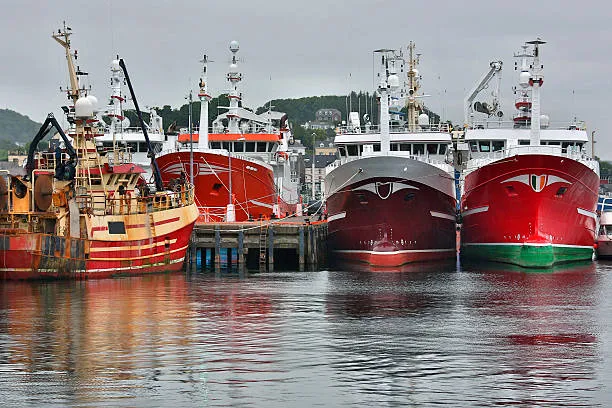
The first time I watched a trawler come into Killybegs, I was not thinking about the European Union. I was thinking about the smell, which is powerful and specific and announces itself before you round the hill on the N56 and see the harbour below. It is the smell of a working port: diesel and brine and fish guts and money. Killybegs sits in south-west Donegal at the head of a deep natural inlet, and it has been Ireland's largest fishing port by both volume and value for as long as anyone I've asked can remember. The town is small. The harbour is not. The relationship between the two has always been the whole point.
I bring this up because in December 2025, in the small hours of a Brussels morning, EU fisheries ministers concluded their annual negotiation over who gets to catch what and how much of it, and the outcome for Ireland was, by any honest measure, catastrophic. The Irish fishing industry lost roughly 57,000 tonnes of quota for 2026. The dockside value of that loss is approximately €94 million. Factor in the processing plants, the refrigerated lorries, the fuel suppliers, and the cafés that feed the crews, and the figure climbs toward €200 million. Some 2,300 jobs are at risk—a number that sounds modest until you understand that most of them are concentrated in a handful of coastal towns where there is no obvious Plan B. Killybegs is one. Castletownbere, in Cork, is another. Howth, on Dublin's doorstep, is a third.
The Seafood Ireland Alliance, a coalition of fishing and processing organisations that does not typically deal in hyperbole, described the deal as "utter devastation." The Irish Minister for Fisheries, Timmy Dooley, used the phrase "an act of betrayal." Neither was exaggerating. They were, however, talking about slightly different betrayals, and it is worth understanding both.
To understand how Ireland arrived at this point, you have to understand the Common Fisheries Policy, which is the EU's framework for managing shared waters. I will try to make this bearable. The CFP grants all member states' fishing fleets equal access to EU waters, then divides the catch through a system of Total Allowable Catches—set annually by the Council of Ministers on the basis of scientific advice—which are parcelled out to member states as national quotas. In principle, it sounds equitable. A shared resource, shared fairly. In practice, Ireland has drawn the short straw since the day it joined the European Economic Community in 1973, when it had a small and underdeveloped fleet. The quota allocations established in those early years were based on historical catch records, which is to say they were based on the size of your fleet at the time, which is to say they locked in an imbalance that has never been corrected.
Here is one way to grasp the scale of that imbalance. Ireland's Exclusive Economic Zone covers some 880,000 square kilometres of Atlantic waters—a vast underwater territory, roughly seven times the area of the island itself. According to the Irish Fish Processors and Exporters Association, Ireland's total combined quotas for 2026 will stand at 119,489 tonnes, valued at about €140 million. In those same waters, other EU member states, along with the United Kingdom and Norway, will be permitted to catch fish valued at more than €1.35 billion. That is not a rounding error. It is structural, and it has been structural for half a century.
The Hague Preferences were supposed to soften this. Introduced in 1976 as a kind of insurance policy, they granted Ireland a larger proportional share of certain stocks whenever Total Allowable Catches fell below a specific threshold—a recognition that Ireland's small fleet needed protection. For nearly fifty years, the mechanism worked, more or less, though it often required late-night lobbying in the corridors of the Council building. I am told that in 2004 and 2006, the Irish minister had to fly to London to personally press the case with the British fisheries secretary, a man with whom he had what was diplomatically described as a good relationship. Things have changed since then.
In December 2025, four member states—France, the Netherlands, Germany, and Poland—blocked the invocation of the Hague Preferences for the first time in the mechanism's history. This is the betrayal Minister Dooley was referring to. The states that benefit most from access to Irish waters chose, at the moment Ireland needed the safety net most, to cut the rope. John Lynch of the Irish South and East Fish Producers Organisation offered a single comparison that says more than any policy brief: Ireland's fleet has been left with 28 tonnes of sole to catch on the south coast in 2026. Belgium has 450.
The scientific advice that drove the quota cuts did not materialise from nowhere. The International Council for the Exploration of the Sea—ICES, the body whose recommendations underpin EU catch limits—issued a grave warning in October 2025. The mackerel stock in the North-East Atlantic was in an unsustainable state. The cause was overfishing, principally by non-EU coastal states: Norway, Iceland, and the Faroe Islands, which set their own unilateral quotas. Since 2010, ICES found, those unilateral quotas had resulted in catches exceeding scientific advice by an average of 39 per cent. The spawning stock was under significant pressure.
ICES recommended a 70 per cent reduction in the EU's mackerel quota for 2026, a 41 per cent cut to blue whiting, and a 22 per cent reduction in boarfish. Mackerel is Ireland's most valuable stock. In 2025, the Irish mackerel quota was worth €94 million in exports to markets across Europe and Asia. A 70 per cent cut could reduce that value by €66 million in a single year. Ireland holds the largest share of the EU's mackerel quota in the western waters area, so the impact falls disproportionately on Irish boats. Irish fishermen, who had complied with the rules, were being asked to absorb the consequences of other nations' overfishing. This is the other betrayal—the structural one, the one nobody in Brussels quite knows how to fix.
Two days after the December Council concluded, the situation acquired a quality that might, in other circumstances, be comic. The UK, Norway, Iceland, and the Faroe Islands signed a four-state agreement on mackerel that set a total allowable catch 72 per cent higher than the level recommended by scientists. They did so without consulting the European Union. On Christmas Eve, the European Commission issued a statement describing itself as "deeply concerned," which is the institutional equivalent of shouting. Irish fishermen, who are not institutions, used plainer language.
The headlines, when they appeared at all, tended to focus on the pelagic fleet—the large vessels that pursue mackerel and blue whiting in deep water. These are the boats with names you see on the sides of processing plants. But the knock-on effects reach much further down, into a world that rarely makes the news.
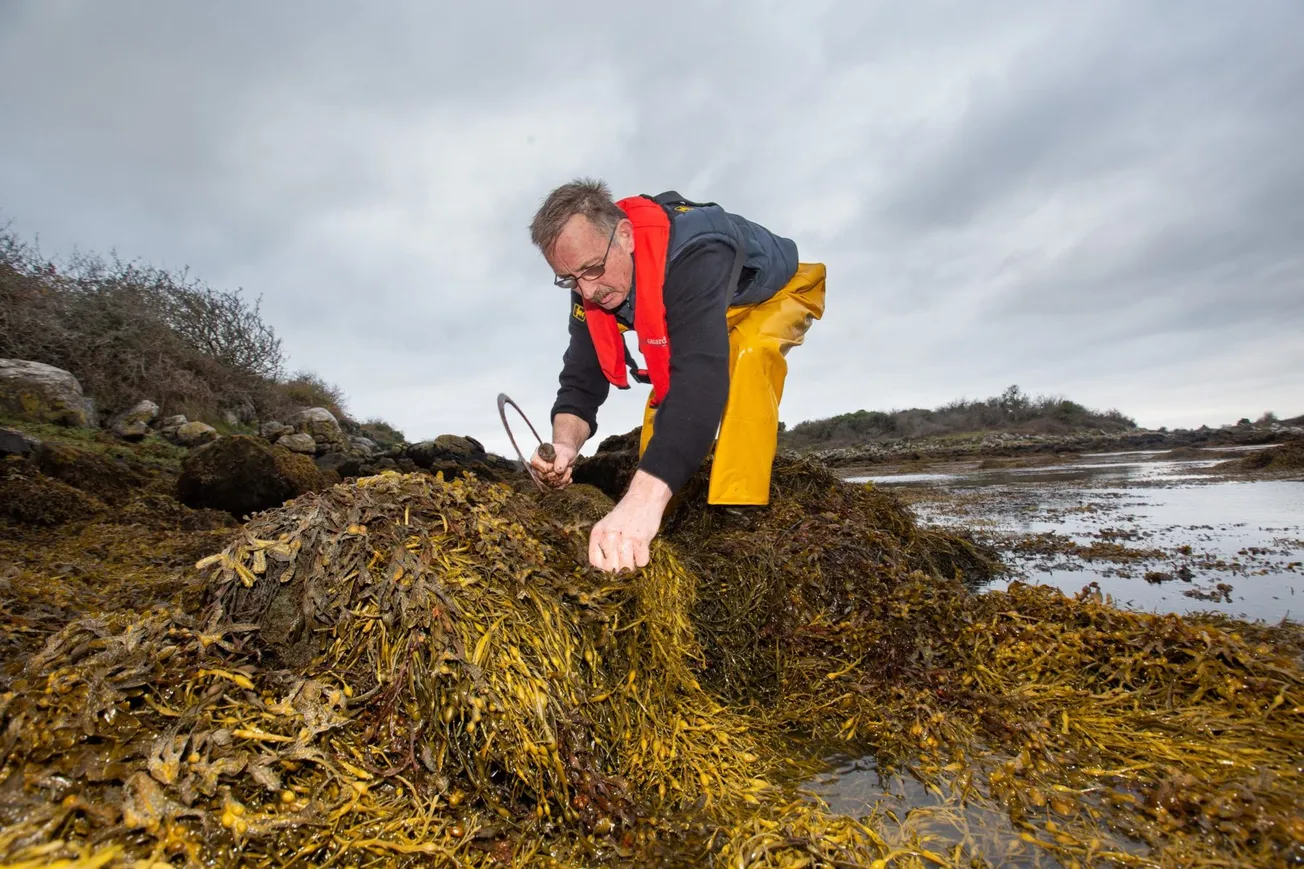
The inshore sector—the small boats that fish for crab, lobster, and whelk close to shore, the currachs and half-deckers and open boats that work the harbours and headlands of the western seaboard—depends on mackerel and blue whiting for bait. Patrick Murphy of the Irish South and West Fish Producers Organisation made this point explicitly: as pelagic quotas collapse and the price of these species rises, bait becomes either unaffordable or unavailable. The inshore fleet, which accounts for the majority of direct employment in Ireland's fishing industry, faces paralysis by proxy. Nobody set out to destroy the lobster boats of Connemara. It is simply what happens when you pull a thread in a system where everything is connected.
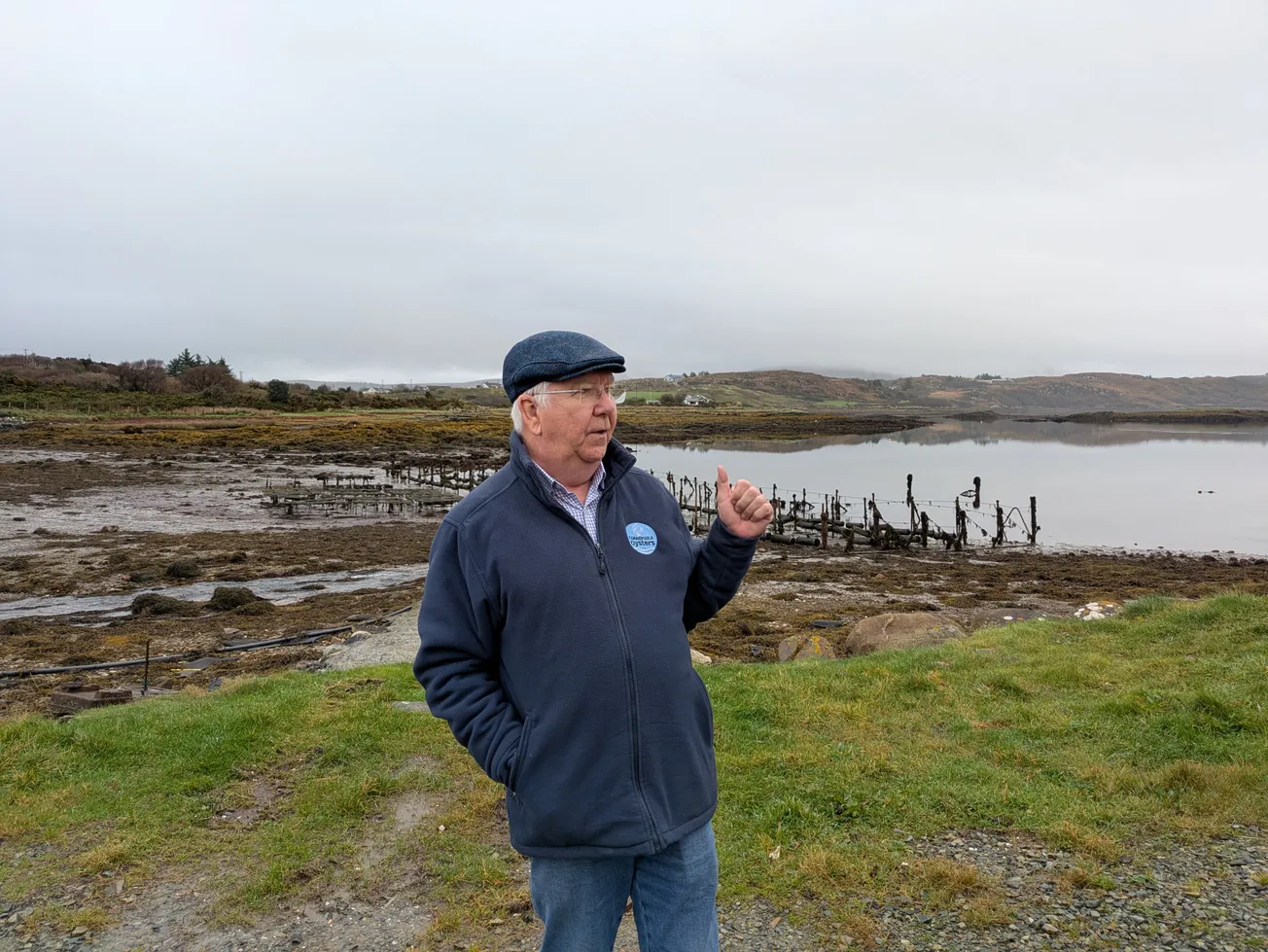
In Killybegs, the Killybegs Fishermen's Organisation estimates that the port will lose nearly half of its fishing opportunities in 2026. Ciarán Doherty, a vessel owner and the organisation's chairperson, sat down and did the arithmetic. He would have roughly fourteen to twenty days at sea in the coming year. I will let that settle. A man with a boat and a crew and overheads and a mortgage, looking at a calendar with three hundred and forty-five empty squares. Dominic Rihan, the organisation's chief executive, said next year will be the toughest the industry has ever faced. He did not qualify the statement. He did not say "one of the toughest."
The processing plants that depend on a steady supply of raw material—the factories that employ people who are not fishermen but whose livelihoods are no less tied to the sea—face an existential question. Brendan Byrne of the Irish Fish Processors and Exporters Association put it simply: "There is no blueprint to deal with the scale of the impacts and the financial consequences for the boats and the factories. We have weathered storms in the past. Albeit, not of the scale of this one." He said the trend could last three to five years. Then he said something that might have been optimism or might have been the particular stubbornness of people who work near the sea: "We will overcome it."
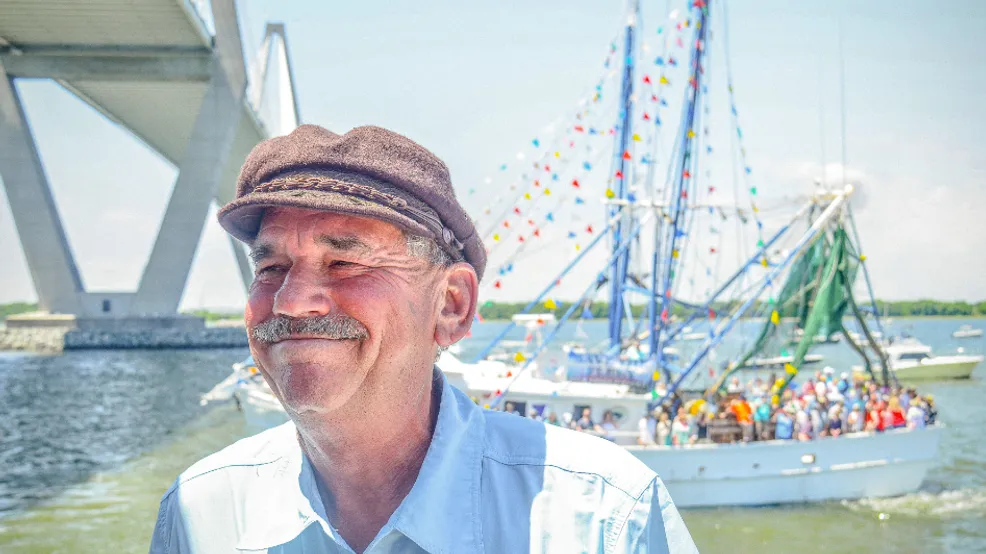
The trouble with a fishing town—and this is something you feel before you can articulate it, standing on the quay at Castletownbere or Rossaveel or Dingle on a weekday morning—is that everything is connected. There is a word in Irish, meitheal, that describes the old practice of neighbours coming together to help with a harvest or a task too large for one family. It has no direct English equivalent, though the Gullah Geechee communities of the Carolina Lowcountry would recognise it in their own tradition of collective labour on the water. A fishing town is a meitheal that never formally disbands. The boats need fuel, so there are fuel suppliers. The crew need food, so there are shops. The catch needs ice and processing, so there are factories. The factories need workers, so there are houses and schools and football clubs and a parish that holds together because there is a reason for people to be there. Remove the catch, and the whole ecosystem—economic, social, cultural—begins to wither. It does not collapse dramatically. It thins. Young people leave. A shopfront goes dark. The school loses a class. The thing that held the place together loosens, and loosens, and then one year you drive through and realise you are looking at somewhere that used to be a town.
Ireland's seafood industry employed 15,673 people directly and indirectly in 2023, according to Bord Iascaigh Mhara. It generated €595 million in exports. Much of that activity is concentrated in communities where the sea is not a backdrop. It is the reason the place exists.
The government has established a taskforce, to be chaired by Michael Berkery, the former chief executive of the Irish Farmers' Association. There is talk of a framework of supports. The Programme for Government commits to securing a sustainable future for fishing communities. These are reassuring words, and I note them here without sarcasm, because the people tasked with delivering on them are inheriting a crisis not of their making. Whether the supports arrive quickly enough—and with sufficient scale—to prevent the kind of irreversible community damage that no taskforce can undo is a different question.
The deeper question—the one that hangs over every pier and processing plant on the western seaboard—is whether Ireland can extract a fairer deal from a system that has, by almost every measure, failed it. The Common Fisheries Policy was last reformed in 2013. The next major review is overdue. Ireland's negotiating position is strengthened by one uncomfortable fact that the rest of Europe would prefer not to dwell on: the fish are in Irish waters. Whether the political will exists to redress half a century of structural inequity is, as they say in Brussels, a matter for the Council.
Brexit has already reduced Ireland's quota share in UK waters by 15 per cent compared to 2020 levels under the Trade and Cooperation Agreement. Climate change is shifting the distribution of stocks in ways that current assessments have only begun to capture. Three to five years is a long time to ask a harbour town to hold its breath. It is also, if you are twenty-two and deciding whether to stay or go, an entire young adulthood.
I have been to enough of these places to know that the people who live there do not describe their situation in the language of policy briefs. They talk about whether their son will have a reason to stay. They talk about the price of diesel and the cost of a pint of bait prawns. They talk about their father's boat, and their grandfather's before that, and the particular quality of light on the water in early morning when the harbour is still and the only sound is the engine ticking over.
If you have ever driven the coast road from Clifden to Killybegs in winter, you will know that the landscape does not invite sentimentality. It is beautiful and hard and it has always asked a great deal of the people who chose to make a life on it. They did not choose it because it was easy. They chose it because the sea was there, and the sea provided. What happens when the provision is taken away—not by the sea itself, but by a system of quotas negotiated in a conference room a thousand miles from the nearest lobster pot—is a question that Ireland has been living with for decades. The answer, as of December 2025, is that it gets worse.
Meanwhile, in Killybegs, the boats sit a little longer at the pier, and the smell of the harbour is a little fainter than it used to be.