Table of Contents
Along the west coast, a small but promising experiment is under way that could change how we grow oysters. Early results from trials of the FlipFarm floating system point to faster growth, better shell shape and, crucially, far less physical labour. For a sector grappling with rising costs and labour shortages, that matters.
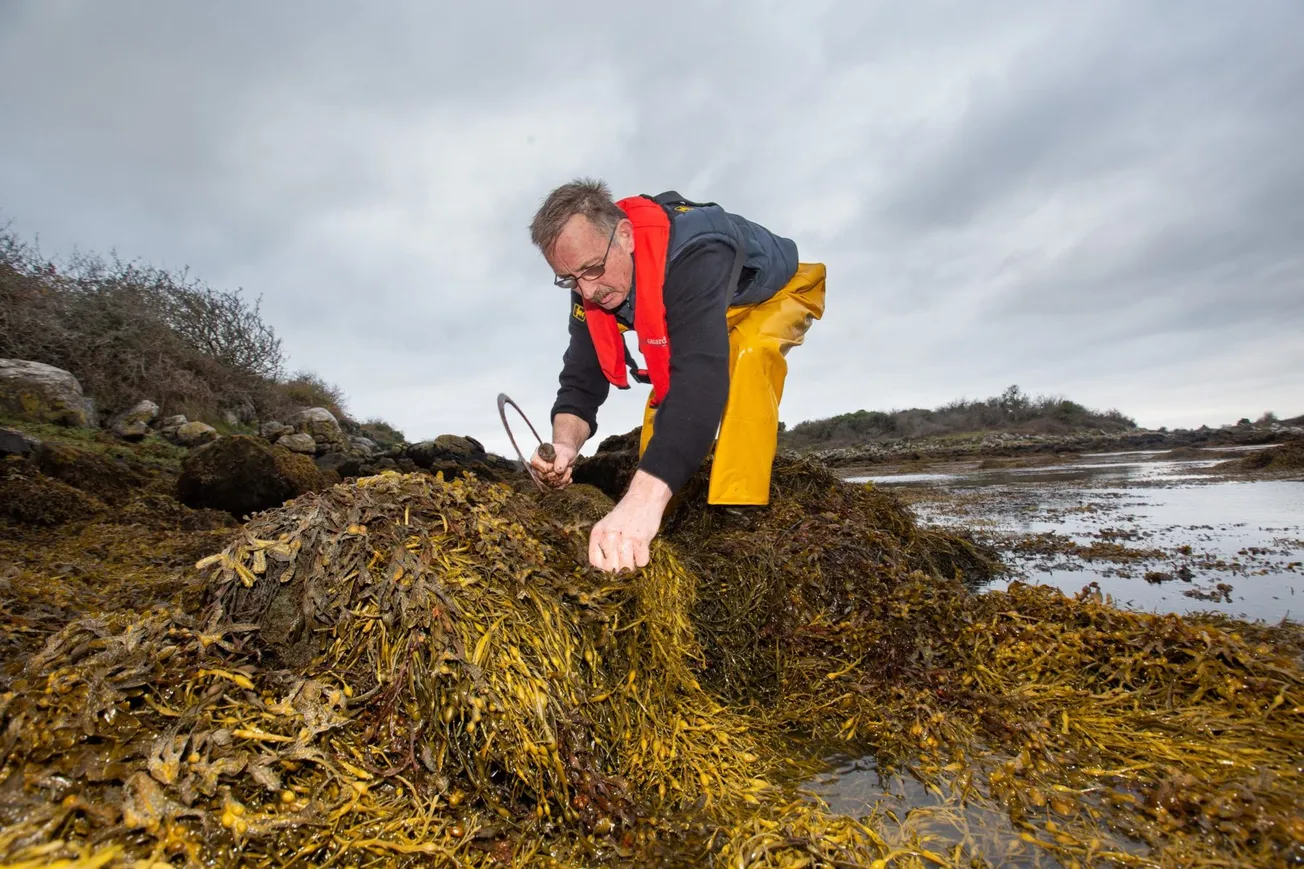
Most Irish oysters are still grown using inter-tidal bags and trestles. It is tough, physical work, carried out in narrow tidal windows and often in difficult weather. Floating systems take a different approach. Oysters are grown just below the surface in baskets that can be flipped mechanically from a boat. This allows continuous feeding while reducing fouling and strengthening shells, without the constant lifting and turning that defines traditional methods.
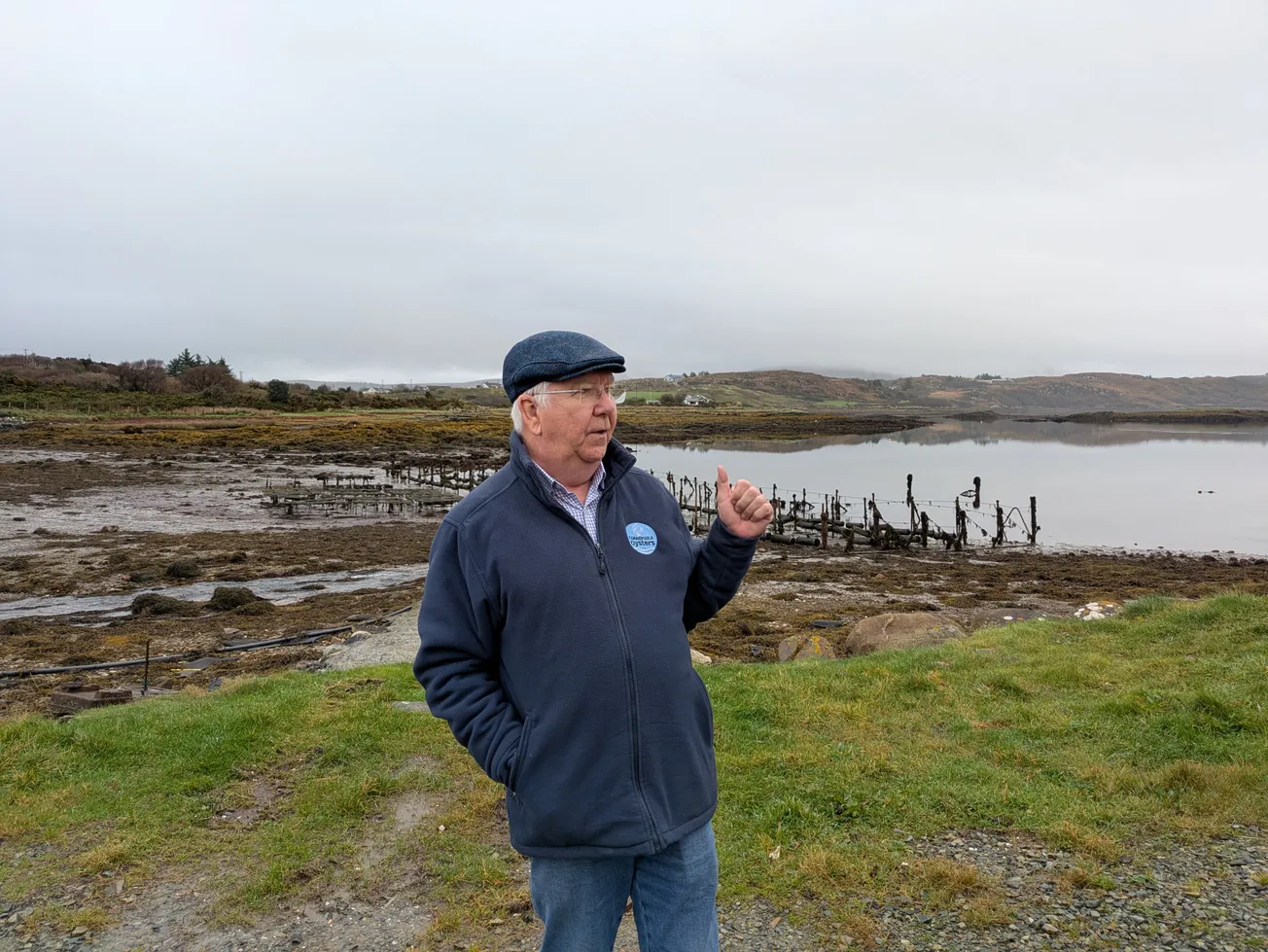
I visited DK Connemara Oysters this winter to see the FlipFarms in action. At both trial sites in Ballinakill Bay and inner Galway Bay, oysters grown from seed in the floating system are already showing stronger growth and smoother shells than those on trestles. The natural movement of surface waters helps shape the oysters, producing more uniform shells and better meat content — the kind of quality that attracts higher prices in export markets.
The impact on working conditions is just as important. Much of the heavy manual labour is removed, and farmers are no longer confined to short tidal windows. That opens the door to more regular hours and work that is physically easier to sustain. In an industry where crews are ageing and recruitment is becoming harder, this could make a real difference.
But the trials also highlight clear limits. Results vary from site to site. In calmer waters, oysters can grow too quickly and become elongated. Oysters transferred part-grown from trestles have performed less well, showing shell wear and higher losses in some cases. The message is simple: floating systems will not work everywhere. Choosing the right locations is critical.
There is also the question of cost. FlipFarm requires significant upfront investment, with specialised equipment imported from overseas. While grant support can offset some of this, it will not suit every producer. Any wider adoption needs to be based on realistic assessments of both biological performance and financial viability.
The multi-year trials provide evidence rooted in Irish conditions rather than relying on overseas success stories. Growth rates, survival, labour savings and commercial outcomes are being tracked over a full production cycle, giving farmers and policymakers a clearer picture of where floating systems make sense.
Floating oyster farming will not solve all the challenges facing Irish aquaculture. But used selectively, and guided by solid research, it could become part of a more resilient future for coastal communities. The opportunity is there — provided decisions are led by data, not hype.